Did you know that over 70% of luxury travelers prioritize destinations blending natural beauty with curated elegance? Whether you crave bohemian-chic beaches or untamed rainforest retreats, two paradises stand out. We invite you to explore these breathtaking escapes, where sophistication meets wild serenity.
At Leneva Tulum, we craft experiences that linger in memory. Picture turquoise waves lapping at powder-white shores, contrasted by emerald canopies alive with exotic wildlife. Each destination whispers a different promise—Tulum’s artful beach clubs or Costa Rica’s secluded eco-lodges—yet both deliver transformative luxury.
Our guests return year after year, drawn by the harmony of refined comfort and untouched landscapes. Follow us @leneva.tulum to uncover hidden gems where every sunset feels personal. Let’s compare coastal charm with rainforest magic—your perfect escape awaits.
Key Takeaways
- Luxury travelers favor destinations combining elegance and natural beauty.
- Tulum offers curated bohemian charm, while Costa Rica thrives with wild ecological wonders.
- Boutique beach clubs contrast with secluded rainforest eco-lodges.
- Both locations provide transformative, sensory-rich experiences.
- Personalized luxury keeps guests returning annually.
Tulum vs Costa Riva: An Introduction to Two Paradises
Imagine waking up to two distinct visions of paradise—one where golden sands meet ancient ruins, the other where emerald jungles hum with life. These two destinations captivate travelers with their unique blends of luxury and raw beauty. One whispers of curated serenity, the other sings of untamed adventure.
Mexico’s bohemian crown jewel enchants with its mystical charm. Once a sleepy fishing village, it now dazzles with designer beach clubs beside Mayan temples. Over 3 million visitors flock to Costa Rica yearly, lured by its Pura Vida ethos—a celebration of rainforest retreats and scarlet macaws soaring overhead.
| Feature | Mexico’s Gem | Costa Rica’s Secret |
|---|---|---|
| Visitor Appeal | Beach lovers, culture seekers | Eco-tourists, wildlife enthusiasts |
| Signature Vibe | Artful luxury | Raw wilderness |
| Hidden Gem | Cenote-dotted coastlines | Osa Peninsula’s biodiversity |
We’ve watched one evolve into a hotspot without losing its soul. The other remains a sanctuary where howler monkeys outnumber people. Both places promise renewal—whether through a mezcal cocktail at sunset or a waterfall hike at dawn.
Your perfect experience depends on the rhythm you crave. Will it be the slow sway of palm trees or the electric buzz of jungle canopies? In these havens of nature, every moment feels like a whispered secret.
The Landscape Showdown: Beaches, Jungles, and Beyond
Nature paints its masterpiece differently in these two paradises—one with strokes of turquoise and gold, the other with emerald and volcanic hues. Whether you seek the gentle lull of waves or the whisper of ancient trees, each destination offers a unique dialogue with the earth’s beauty.
Turquoise Waters and Sacred Cenotes
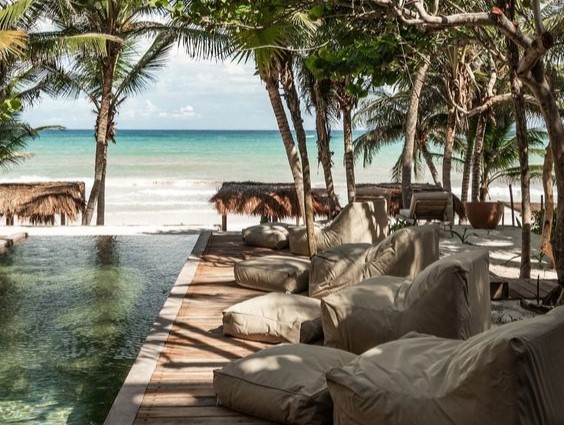
Mexico’s coastline cradles Playa Paraíso, a crescent of powder-white sand lapped by translucent waves. Just inland, the cenotes—sacred limestone pools like Gran Cenote—glow with sunlight filtering through their caverns. These natural wells, once revered by the Maya, now invite swimmers into their cool, crystalline embrace.
Nearby, the Mesoamerican Reef teems with neon fish, while hidden coastal caves reveal stalactites draped like chandeliers. For a quieter escape, we recommend the secluded shores south of Playa del Carmen, where the jungle meets the sea.
Rainforests and Volcanic Wonders
Costa Rica’s jungle heart beats loudest in Manuel Antonio National Park, where 150,000 visitors yearly wander trails alive with sloths and toucans. The Monteverde Cloud Forest, a misty realm with 400+ bird species, feels like stepping into a living cathedral.
Further north, Arenal Volcano’s thermal springs steam under starry skies, contrasting with the Pacific’s black volcanic beaches. For underwater adventures, Caño Island’s coral gardens rival any postcard—just don’t miss the dolphins that often race alongside boats.
| Feature | Mexico’s Coastline | Costa Rica’s Wilderness |
|---|---|---|
| Iconic Scenery | Sunlit cenotes, white-sand beaches | Cloud forests, volcanic hot springs |
| Wildlife Encounters | Reef fish, sea turtles | Howler monkeys, scarlet macaws |
| Best for | Snorkeling, cave exploration | Birdwatching, jungle trekking |
Luxury Accommodations: Where to Stay in Style
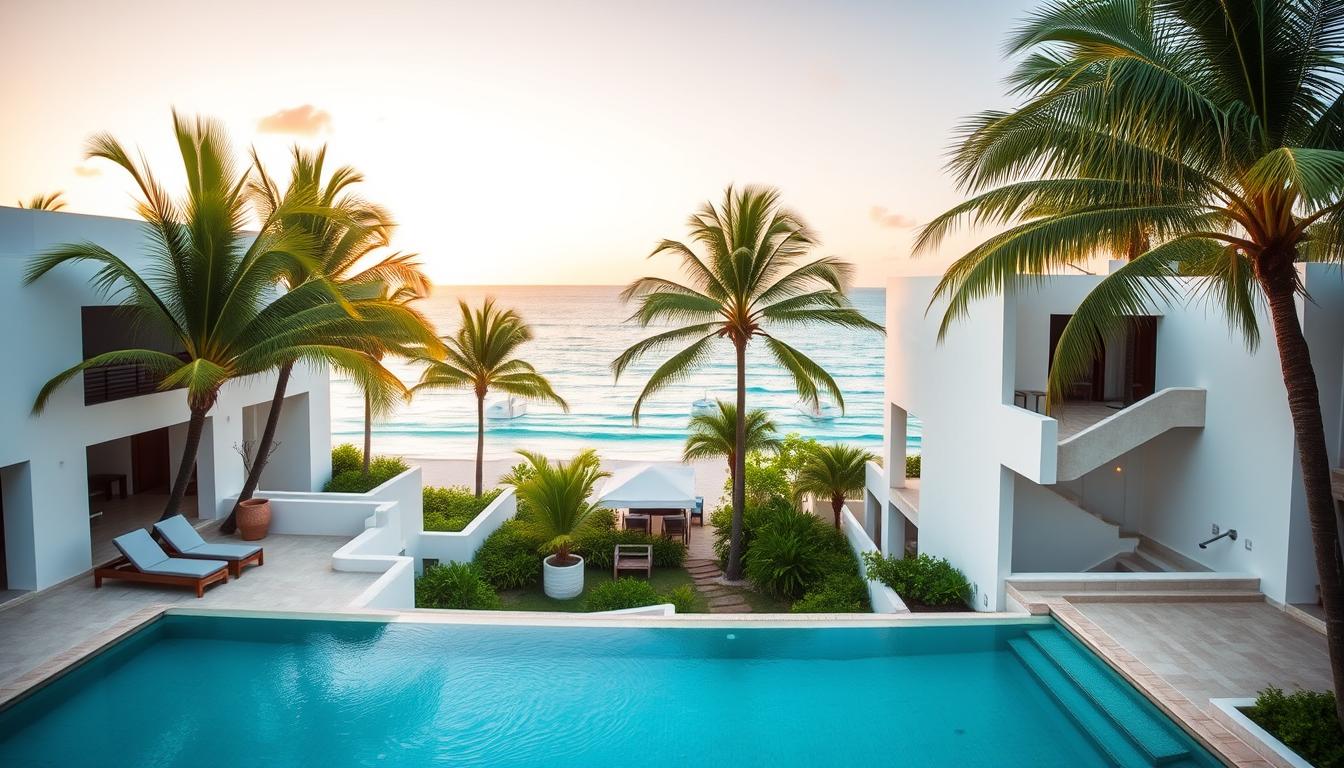
Where you rest your head transforms a trip into an unforgettable journey. At Leneva Tulum, we craft sanctuaries where minimalist design whispers ancient Mayan spirituality. Crisp linen meets handwoven textiles, and every villa frames the turquoise horizon like living art.
Compare two visions of paradise:
- Jewel of the Coast: Beachfront palapas with private pools, where dawn paints the Caribbean in gold. Our Zona Hotelera selections blend high-quality linens with the lull of whispered waves.
- Rainforest Reverie: Costa Rica’s Nayara Tented Camp elevates luxury—think suspended bathtubs overlooking emerald canopies. At Lapa Rios, solar-powered elegance harmonizes with howler monkey serenades.
We’ve personally vetted each location for sustainability and soul. From recycled teak furnishings to zero-waste spas, every detail nurtures both guest and earth.
“True luxury leaves no trace but memories.”
For insider access to hidden gems—like a treehouse suite with 360° jungle views—follow @leneva.tulum. Our curated collection at www.lenevatulum.com ensures your stay matches the rhythm of your dreams.
Nearby, boutique shops offer handcrafted treasures, from amber jewelry to organic coffee. Because the best souvenirs aren’t bought—they’re felt.
Culinary Delights: Tulum’s Flavors vs Costa Rica’s Traditions
Every bite tells a story in these two culinary wonderlands—one infused with smoky mezcal, the other humming with rainforest-grown coffee. We’ve savored whispered secrets from beachside grills to jungle kitchens, where chefs treat ingredients like heirlooms.
Tacos and Mezcal: Bohemian Elegance on a Plate
At Hartwood—named among Latin America’s 50 Best restaurants—flames lick fresh catch under open skies. Nearby, Kin Toh’s nest-like platforms serve octopus carpaccio with panoramic jungle views. Things get magical at sunset: artisanal mezcal tastings paired with chili-spiced mango.
For plant-based travelers, the coastal area thrives with vegan bistros like Raw Love. Their coconut ceviche? A revelation. Don’t miss the tiniest taquerías—where handmade tortillas cradle slow-braised cochinita pibil.
Gallo Pinto and Fresh Seafood: Rustic Soul Food
Costa Rica’s local cuisine sings at Soda Tapia, where casados (farmers’ plates) burst with yuca and black beans. Morning rituals begin with gallo pinto—rice and beans kissed by cilantro—served alongside sunrise-warmed tortillas.
At Puerto Viejo’s farmers’ markets, fishermen grill dorado on open fires. For gluten-free travelers, family-run restaurants like La Esquina offer plantain-based alternatives. Pro tip: Sip single-origin coffee while scarlet macaws squawk overhead.
“Cooking here isn’t technique—it’s listening to the land.”
| Feature | Mexico’s Gem | Costa Rica’s Secret |
|---|---|---|
| Must-Try Dish | Wood-fired tacos al pastor | Volcanic rock-seared tuna |
| Signature Sip | Smoky mezcal flights | Tarrazú region coffee |
| Dietary Ease | Vegan/gluten-free hubs | Farm-fresh adaptability |
Whether you crave avant-garde plating or barefoot beach picnics, both destinations turn meals into memories. Follow @leneva.tulum for our private dining guides—where every reservation feels like an invitation.
Cultural Experiences: History and Local Vibes
History breathes through every stone and leaf in these two lands. One whispers through Mayan temples perched above turquoise waves, the other in rainforest rituals passed down for generations. We invite you to uncover layers of heritage—where every artifact tells a story.
Mexico’s cliffside ruins draw over 2M+ visitors each year. At dawn, the El Castillo pyramid glows with celestial precision, revealing ancient astronomical wisdom. Nearby, boutique galleries showcase contemporary art inspired by sacred places like Cobá’s hidden cenotes.
Costa Rica’s Pre-Columbian Gold Museum dazzles with 1,600+ artifacts. Yet the real magic lives in BriBri villages, where cacao becomes chocolate through indigenous techniques. Make sure to check local workshops—oxcart painting blooms with the same vibrancy as San José’s street murals.
- Sacred Rituals: Sweat it out in a temazcal (Mayan steam ceremony) or learn oxcart symbolism from Costa Rican elders.
- Art Trails: Follow Tulum’s bohemian galleries or the city’s politically charged murals.
- Timeless Crafts: Watch amber jewelry carved by hand or rainforest seeds woven into baskets.
“Culture isn’t preserved behind glass—it’s lived in every fire-lit story and hand-painted mural.”
History buffs marvel at stelae etched with Mayan glyphs, while eco-culture lovers chase hummingbirds through organic coffee farms. Both worlds promise connection—just through different dialects of tradition.
Adventure Awaits: Thrilling Activities in Both Destinations
Adrenaline pulses differently in these two havens—one beneath crystal caves, the other above emerald canopies. Whether you crave weightless exploration or high-speed jungle flights, both destinations deliver unforgettable adventure.
Plunge into Mexico’s underwater cave systems, where sunlight dances through limestone tunnels reaching 60m depths. Our specialists recommend these liquid cathedrals for advanced divers, though beginner-friendly cenotes exist. Contrast this with Costa Rica’s Class IV rapids, where the Pacuare River thunders through untouched rainforest.
Horseback riding takes contrasting forms too. Picture galloping along Caribbean shores at sunset versus cloud forest trails where toucans dart between ancient trees. For altitude lovers, zip lines here average 45mph—enough to make your heart race above the canopy.
Timing matters. December-April brings ideal kiteboarding winds along Mexico’s coast, while Costa Rica’s volcano hiking trails shine in dry season (January-April). Our team curates seasonal guides to match your dream experience.
Seeking challenges? Try freediving courses in hidden cenotes or tackle Costa Rica’s 28km Corcovado trek through primary rainforest. Beginners thrive in Mexico’s shallow reef snorkeling or Costa Rica’s wildlife-rich parks like Manuel Antonio.
“True adventure isn’t about difficulty—it’s about finding where your soul feels most alive.”
Follow @leneva.tulum for real-time activity updates. Whether you’re drawn to silent underwater worlds or jungle canopies buzzing with life, we’ll help you dive in—literally or figuratively.
Safety First: Which Destination Feels More Secure?
Peace of mind shapes every unforgettable journey—let’s explore how these destinations safeguard it. Costa Rica consistently ranks as Latin America’s safest country per the Global Peace Index, while Mexico’s coastal gem maintains a visible tourist police presence. But safety isn’t just statistics; it’s how people breathe easier on moonlit beach walks.
Resort areas in both locales boast low crime rates, yet remote regions demand a bit more vigilance. Our security team treats sunset strolls like royal processions—flashlights tracing the tide, radios humming softly. In rainforest excursions, guides carry satellite phones and venom antidotes, whispering safety protocols like lullabies.
| Safety Factor | Mexico’s Coast | Costa Rica’s Wilds |
|---|---|---|
| Transportation | Colectivos (shared vans) with regulated routes | Mountain roads requiring 4×4 in rainy season |
| Medical Options | Boutique clinics for minor care | CIMA Hospital’s int’l-standard ER |
| Solo Female Tips | Stick to well-lit hotel zones post-10PM | Join guided groups for Corcovado treks |
For solo female travelers, packing a doorstop alarm and avoiding deserted streets at night applies to both. Yet Costa Rica’s Pura Vida ethos means locals and visitors coexist with rare friction. In Mexico, VIP transportation options like private drivers ease navigation.
“Safety isn’t the absence of risk—it’s the presence of thoughtful preparation.”
We vet every activity partner, from cenote divers to zip-line operators. Because true luxury isn’t just caviar on the beach—it’s knowing you’re wrapped in invisible care.
Nightlife and Festivals: From Jungle Raves to Beach Parties
When the sun sets, two distinct rhythms emerge—one pulsing with neon-lit shores, the other echoing through emerald canopies. Over 500,000 visitors flock to Mexico’s coast for Zamna Festival’s otherworldly beats, while Costa Rica’s Envision Festival draws 25,000+ souls to its waterfall-stage sanctuary. We’ve danced beneath both skies, where the nightlife isn’t just entertainment—it’s a pilgrimage for the senses.
Compare VIP tables at Taboo, where bottle service glows under palm fronds, to Ocaso Festival’s bamboo platforms perched above jungle streams. One experience thrills with celebrity DJs; the other weaves live percussion into crashing waves. Our insiders reserve front-row spots for guests craving both—whether it’s a velvet-rope sunrise or a sacred cacao ceremony at dawn.
Beyond the main stages, hidden gems await. Mexico’s underground techno temples pulse in repurposed cenotes, while Costa Rica’s sustainable sound camps run on solar power. The world of after-dark magic lives in these secrets—like a bioluminescent bay party where swimmers trail light like fallen stars.
| Feature | Beachfront Beats | Jungle Frequencies |
|---|---|---|
| Signature Vibe | Designer daybeds, champagne sprays | Hammock lounges, fire-dancing troupes |
| Sound Quality | Crisp ocean-air acoustics | Natural rainforest reverb |
| Recovery Spaces | Private beach cabanas | Riverside yoga at dawn |
Sound engineers debate which destination masters music immersion—Mexico’s custom beachfront systems or Costa Rica’s canopy-shrouded bass. Yet true luxury lies in balance. Our guests recharge with tailored itineraries: a morning massage after a jungle rave, or a silent snorkel to reset after bass-heavy nights.
“Festivals here aren’t just parties—they’re ecosystems where beats and biodiversity collide.”
Follow @leneva.tulum for backstage passes to both worlds. Whether you crave the high-energy pulse of coastlines or the earthy resonance of rainforests, we’ll sync your rhythm to the perfect after-dark escape.
Eco-Tourism and Sustainability: Green Travel Compared
Two worlds, one shared mission: protecting paradise while welcoming travelers. Costa Rica powers nearly all its nature with renewable energy, while Mexico safeguards 1.3 million acres in the Sian Ka’an Reserve. Both prove luxury and conservation can thrive together.
Resorts here don’t just offset carbon—they redefine it. Think solar-powered jungle villas with private reforestation projects. Or beachfront suites funding coral nurseries. Every stay actively heals the earth.
- Plastic-Free Pledges: Straw bans along the coast vs. nationwide policies eliminating single-use items by 2025.
- Hands-On Healing : Join marine biologists transplanting staghorn coral or plant almendro trees for endangered macaws.
- Community First: Meet women-led cooperatives producing organic chocolate or Mayan families guiding sacred cenote tours.
| Initiative | Coastal Gem | Rainforest Haven |
|---|---|---|
| Energy | Solar-powered beach clubs | 98% national renewable grid |
| Waste | Zero-waste spa protocols | Composting mandates for hotels |
| Wildlife | Sea turtle protection programs | Corridor expansion for jaguars |
“We don’t just visit these places—we become part of their story. Every choice, from sunscreen to souvenirs, writes the next chapter.”
Which destination leads? Costa Rica’s policies set global benchmarks, while Mexico’s boutique approach offers intimate conservation experiences. Both share a reverence for natural beauty, ensuring your footprint fades—but your memories don’t.
Transportation and Accessibility: Getting Around Easily
Accessibility shapes every journey, and here, even the ride becomes part of the experience. Whether gliding in a Mercedes van along coastal highways or bouncing through rainforest trails in a 4×4, each transfer whispers the destination’s personality.
Private transfers offer seamless luxury. From Cancún’s airport, expect plush seating and chilled towels for $129. In contrast, Costa Rica’s $48 shuttles to Arenal trade polish for adventure—think open-air rides past volcanic vistas.
The area around Mexico’s coast thrives with bike-friendly paths, where guests pedal to beach clubs under palm shade. Meanwhile, Costa Rica’s mountain roads demand sturdy vehicles, especially in rainy season. Our team arranges helicopter charters for both regions—ideal for skipping traffic or savoring aerial views.
Ride-sharing options vary wildly. Coastal networks rely on WhatsApp-coordinated drivers, while rural routes may require pre-booked guides. For travelers with mobility needs, paved pathways dominate Mexico’s hotel zone, whereas Costa Rica’s jungle lodges offer adaptive tours.
“The right transport doesn’t just move you—it prepares your senses for what’s ahead.”
| Feature | Coastal Gem | Rainforest Haven |
|---|---|---|
| Best for Scenery | Ocean-view highways | Canopy-covered backroads |
| Unique Option | Bicycle rentals ($15/day) | Riverboat transfers |
| Accessibility | Wheelchair-friendly resorts | Adaptive hiking trails |
Every location rewards thoughtful planning. Share your itinerary with our concierge—we’ll ensure your travel costs align with both comfort and discovery.
Budget Breakdown: Which Destination Fits Your Wallet?
Luxury travel shouldn’t require financial guesswork—let’s illuminate the true travel costs of paradise. We’ve curated transparent comparisons so your dollars enhance every sunset view and jungle canopy encounter.
| Budget Factor | Coastal Elegance | Rainforest Retreat |
|---|---|---|
| Daily Average | $123 (pre-pandemic) | $105 (pre-pandemic) |
| Luxury Accommodation | $1,500/night beachfront villas | $900/night canopy lodges |
| Value Sweet Spot | Shoulder season (May-June) | Early December rainforest access |
Dining reveals stark contrasts. Picture $50 artisanal mezcal cocktails versus $10 casados (hearty local plates). Our planners recommend mixing high-impact splurges—like a private cenote dinner—with affordable options like taco stands bursting with flavor.
Timing transforms value. Mexico’s coast shines September-November when rates dip 30%, while Costa Rica’s dry season (January-April) offers prime wildlife viewing. Book 6-8 months ahead for peak year-round demand.
- Hidden Costs: Beach club minimums vs. national park entry fees
- Smart Splurges: Private guides maximize limited spend time
- Budget Buffer: Always allocate 15% for spontaneous adventures
“True luxury isn’t about price tags—it’s about perfect alignment between experience and investment.”
For a 7-day escape, $3,500-$5,000 unlocks both destinations’ magic. This covers boutique stays, curated activities, and those unforgettable “wow” moments—like a bioluminescent kayak tour or treetop massage. Follow @leneva.tulum for real-time money-saving alerts when special rates emerge.
Family-Friendly or Romantic Getaway? Picking the Right Vibe
Some vacations are measured in sandcastles built, others in sunset kisses stolen. We’ve designed experiences for both—whether your heart yearns for children’s laughter echoing through jungle trails or private moments suspended in time.
Costa Rica welcomes over 200,000 young explorers yearly to its interactive Children’s Museum. Meanwhile, secluded beachfront dinners for couples average $3,500, complete with personal chefs and violins. The choice isn’t about better—it’s about belonging.
| Consideration | For Families | For Romance |
|---|---|---|
| Top Activity | Wildlife spotting in Manuel Antonio | Floating breakfasts in private pools |
| Ideal Stay | Two-bedroom villas with kids’ clubs | Treehouse suites with outdoor tubs |
| Hidden Perk | Educational turtle releases | Stargazing from volcanic hot springs |
Multigenerational groups thrive in Costa Rica’s eco-lodges, where every person finds wonder—grandparents spotting toucans while teens zip-line through canopies. Mexico’s coast offers calmer seas for toddler paddling, though seaweed varies seasonally.
“The best family trips plant seeds of curiosity, while romantic escapes water the roots of connection.”
Honeymooners craving privacy should consider rainforest hideaways over Instagram-famous beaches. Our family-friendly specialists match resorts to children’s ages—think shallow lagoons for tots versus teen surf camps.
Ultimately, the right destination whispers to your current season of life. We’re here to ensure your chosen paradise—whether filled with tiny handprints or champagne flutes—feels like it was made just for you.
Local Markets and Shopping: Unique Souvenirs to Bring Home
Shopping here isn’t about transactions—it’s about connecting with artisan souls. In Mexico’s Mercado Maya, find plenty of hand-embroidered textiles dyed with cochineal insects. Across Central America, San José’s 200-stall market bursts with wooden jaguar carvings from Boruca tribes. Both places turn souvenirs into legacy pieces.
Ethical buying matters. We guide guests to cooperatives like Mujeres Sembrando Vida, where Mayan women craft beeswax wraps. In Costa Rica, Bribri communities sell chocolate made from ancestral cacao recipes. These purchases sustain traditions beyond tourist seasons.
| Find | Coastal Markets | Rainforest Markets |
|---|---|---|
| Best For | Handwoven hammocks, amber jewelry | Hardwood masks, organic coffee |
| Luxury Shops | Boutiques with designer ceramics | Eco-stores featuring upcycled glass |
| Hidden Gem | Thursday producer market | Full moon indigenous fairs |
Food lovers discover local cuisine through market stalls. Sample Oaxacan mole spices or Costa Rican pejibaye palm fruit. Many vendors offer cooking demos—where buying ingredients becomes part of the experience.
“The best souvenirs don’t sit on shelves—they spark stories every time you touch them.”
For fragile items, make sure check airline policies. We recommend wrapping ceramics in banana leaves (sold at markets) and shipping hardwood carvings via certified eco-couriers. Your treasures deserve safe passage home.
Conclusion: Choosing Between Tulum and Costa Riva
The final choice between these paradises depends on what stirs your soul—polished elegance or untamed wonder. Each destination preserves natural beauty differently, whether through curated beach clubs or rainforest trails humming with life.
We’ve watched guests wrestle with this decision. Some crave Mexico’s hurricane-season serenity (June–November), while others chase Costa Rica’s dry-season volcanic sunrises. Our team confesses: we alternate based on the year’s rhythm—monsoon mists one winter, turquoise tides the next.
Follow @leneva.tulum for real-time insights. Whether you seek barefoot luxury or canopy-high adventure, both paths lead to transformation. Your perfect escape isn’t just a place—it’s the version of yourself you’ll meet there.
FAQ
Which destination offers better beaches for relaxation?
Both destinations boast stunning shorelines, but Tulum’s turquoise waters and soft white sands create a serene paradise, while Costa Rica’s Pacific coast offers dramatic scenery with lush backdrops.
Are there family-friendly activities in both locations?
Absolutely! Tulum’s cenotes and ancient ruins captivate all ages, while Costa Rica’s national parks and wildlife encounters provide unforgettable adventures for families.
How do dining experiences compare between the two?
Tulum’s culinary scene blends modern Mexican flavors with fresh seafood, while Costa Rica’s local cuisine highlights farm-to-table ingredients like gallo pinto and tropical fruits.
Which destination is more budget-friendly?
Costa Rica tends to offer more mid-range options, while Tulum’s luxury resorts and boutique dining can elevate travel costs. Both have ways to tailor spending to your preferences.
Is it easy to explore without a rental car?
Tulum’s compact beach zone is walkable, while Costa Rica’s diverse regions may require shuttles or guided tours for seamless exploration.
What unique souvenirs can I find in each place?
Tulum’s artisan markets showcase handwoven textiles and Mayan crafts, while Costa Rica’s eco-friendly shops offer coffee, wooden carvings, and organic skincare.
Which destination has more eco-conscious accommodations?
Both prioritize sustainability! Tulum’s jungle lodges blend seamlessly with nature, and Costa Rica’s eco-lodges are pioneers in green hospitality with renewable energy practices.